A ring can look old without being vintage, and it can be genuinely vintage without matching the style people expect. Learning how to date vintage rings means looking beyond one clue. The most reliable answer comes from the full picture: design, materials, construction, hallmarks, stone cuts, wear, and any documented history.
For buyers, dating helps set fair expectations about value and condition. For sellers, it helps describe a piece honestly. A 1970s turquoise sterling ring, for example, should not be priced or presented like a 1920s Art Deco piece just because both are handmade and have visible age.
Start With the Ring’s Overall Style
Style is often the fastest way to place a ring in a likely era. It is not final proof, because older styles have been revived many times, but it gives you a useful starting range.
Victorian rings, generally from the mid-1800s through 1901, often feature sentimental symbols, floral details, snakes, stars, seed pearls, garnets, and engraved gold work. Late Victorian pieces may have darker, more elaborate designs and old-cut diamonds.
Edwardian rings, roughly 1901 to 1915, tend to look lighter and more delicate. Platinum became popular for fine jewelry, and lacy openwork, bows, garlands, filigree, diamonds, pearls, and pale gemstones are common. A genuine Edwardian ring often feels airy even when it is detailed.
Art Deco jewelry, most associated with the 1920s and 1930s, is easier to recognize. Look for crisp geometry, stepped patterns, straight lines, onyx accents, calibrated stones, and bold color combinations such as sapphire and diamond. White gold and platinum settings are especially common.
Retro rings from the 1940s are usually bigger and warmer in appearance. Yellow and rose gold, sweeping curves, ribbon-like forms, large synthetic rubies, and high-set stones fit the period. Wartime limits on platinum also pushed many jewelers toward gold.
Mid-century rings from the 1950s and 1960s can range from polished and tailored to playful and sculptural. By the 1970s, textured gold, freeform silver, turquoise, coral, large cabochons, and artisan-made designs became widely popular. Native American jewelry and Southwest-inspired styles were especially visible during this period, though individual makers and regional traditions span much more than one decade.
How to Date Vintage Rings by Construction
Turn the ring over. Construction tells a story that a top view can hide. Look at how the stone is held, whether parts are cast or assembled, how the shank meets the setting, and whether the inside of the ring shows careful finishing.
Older fine rings were often hand-fabricated. You may see slight irregularity in engraving, pierced work, or wire details. That does not mean rough workmanship. It means the small variations are consistent with handwork rather than identical machine-made repetition.
A die-struck ring, common in many early 20th-century pieces, can have sharp details and a dense feel because the metal was pressed into shape. Later cast rings may show softer edges, mold marks, or a more uniform appearance. Neither method is automatically better. Construction helps date a ring, but it must be considered alongside style and materials.
Pay close attention to the setting. Early prong settings can be fine and individually shaped, while modern replacement prongs may look thicker or brighter than the rest of the ring. A vintage ring may have been repaired, resized, or reset over its lifetime. Those changes are normal, but they can make one feature look newer than the piece as a whole.
Read Hallmarks, but Do Not Rely on Them Alone
Hallmarks can be one of the best dating tools when they are clear and original. On the inside of the band, look for metal marks such as 10K, 14K, 18K, PLAT, 925, STERLING, or country-specific assay marks. A maker’s mark can also identify a jeweler or workshop.
Still, marks have limits. Many American vintage rings were never fully marked, especially handmade silver jewelry. Marks can wear down with decades of use, disappear during resizing, or be added later on imported pieces. A 925 stamp only confirms a sterling standard claim. It does not, by itself, prove a ring was made in a particular year.
If a ring has a recognizable maker’s mark, compare it with the maker’s known working period, typical materials, and usual designs. For signed Native American jewelry, a name or initials can be valuable evidence, but initials alone are not enough to make a certain attribution. Similar initials may belong to different artists, and some marks were used by trading posts or workshops.
When buying, a tested metal result matters as much as a stamp. Authenticity should be supported by the piece itself, not just a tiny mark that is easy to misread.
Study the Stone Cut and Setting Details
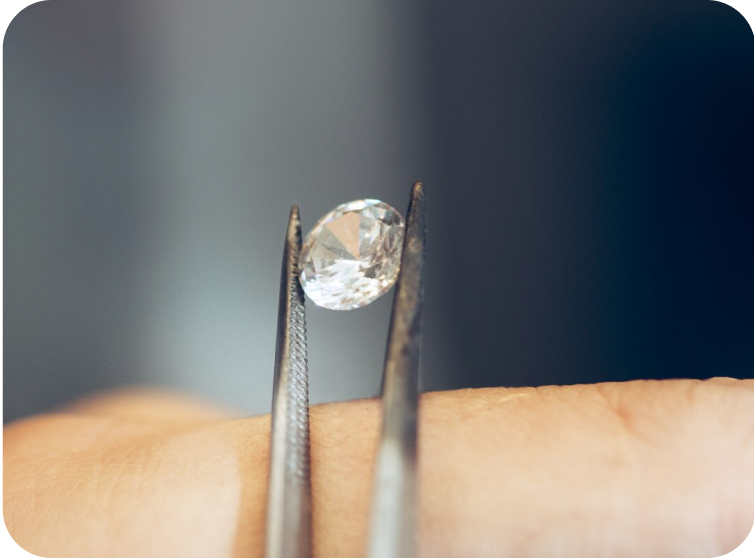
Gemstones can narrow the date range, especially in fine jewelry. Old mine-cut and old European-cut diamonds are often found in 19th-century and early 20th-century rings. They usually have a softer, less uniform appearance than modern round brilliant diamonds, with a smaller table and a taller crown.
Step-cut emeralds, sapphires, and diamonds fit naturally with Art Deco styling, while large cabochon turquoise, coral, moonstone, and jade appear across many eras. The stone alone cannot date the ring. Turquoise has been used in jewelry for generations, and a cabochon can be old, newly cut, or a later replacement.
Look for whether the stone fits the setting naturally. A loose fit, fresh-looking bezel, or mismatched prongs may indicate repair or replacement. That is not necessarily a problem, but it affects how confidently you can date the ring in its current form.
Check for Honest Wear and Useful Clues
Real age usually shows in quiet ways. The underside of the band may be slightly thinner from daily wear. High points on engraving may be softened. Older stones can have minor abrasions, and original finishes may look gently mellow rather than perfectly bright.
Wear is not proof, though. A ring can be artificially aged, while a carefully stored vintage ring can look remarkably fresh. Use wear as supporting evidence, not the deciding factor.
These four checks are especially useful before assigning a date range:
- Compare the wear on the shank, setting, and hallmark. They should make sense together.
- Look for resizing seams, replaced prongs, or new solder that may indicate later work.
- Check whether the metal color matches across all parts of the ring.
- Inspect the stone for a cut, condition, and fit that suit the setting.
A loupe makes this easier, but good close-up photos can also reveal a great deal. If you are unsure, a knowledgeable vintage jewelry dealer or qualified jeweler can inspect the ring in person.
Separate Vintage Style From Vintage Age
A common mistake is calling every antique-looking ring vintage. Jewelry makers have long reproduced Victorian, Edwardian, and Art Deco looks. A new filigree ring may be beautifully made, but it is not an original 1920s ring just because it has geometric details and a white-metal finish.
The reverse can happen too. Some authentic 1960s or 1970s rings look modern enough to be mistaken for current production. This is especially true with minimalist gold rings, modernist silver designs, and one-of-a-kind artisan work.
The most honest wording is often a range rather than an exact year: “likely 1940s to 1950s,” “mid-century,” or “1970s artisan-made.” Exact dates require unusually strong evidence, such as a dated inscription, original receipt, catalog match, or a clearly documented maker.
Buy the Ring, Not Just the Era
Dating adds context, but condition, craftsmanship, metal content, stone quality, and personal style still matter. An unsigned 1970s sterling turquoise ring can be a better value and a better everyday piece than a damaged ring from an earlier period with an uncertain story.
At Vintage Jewelry Trade, pieces are authenticated and tested so buyers can focus on the details that matter: whether the ring fits their collection, their budget, and the way they plan to wear it. Ask for clear photos of marks, measurements, condition notes, and any known repairs before making a decision.
The best vintage ring is not always the oldest one. It is the piece whose age, materials, condition, and price all make sense together – and whose character still feels right when you put it on.